
DotCraft SDKs
DotCraft SDKs are language bindings over the same AppServer protocol. They let applications, native apps, tools, and external channels connect to a workspace, reuse persistent threads, stream turn events, and participate in approvals without reimplementing Session Core.
Get started
npm install @dotcraft/sdkdotnet add package DotCraft.Sdkpip install dotcraftThen follow the Quickstart to connect, start a thread, and run your first turn.
Guide
- Quickstart — install, connect, run a turn, stream events.
- Threads & runs — thread lifecycle, run options, and the normalized event model.
- Tools & approvals — runtime dynamic tools and approval / user-input callbacks.
- Channel adapters — build external channels (TypeScript and Python).
Common Model
All SDKs build on the same layers:
| Layer | Role |
|---|---|
| Hub bootstrap | Finds or starts the local Hub and ensures a workspace AppServer when using local mode. |
| AppServer JSON-RPC | Carries initialize, thread and turn methods, notifications, server requests, and raw escape-hatch calls. |
| Session Core | Provides the durable Thread -> Turn -> Item model, approvals, event ordering, and persisted history. |
| SDK binding | Adds language-idiomatic clients, helpers, callbacks, stream reducers, and typed wrappers. |
Use the SDK when you want a client library. Use the AppServer Protocol directly when you are implementing a new transport, debugging the wire protocol, or need complete control over JSON-RPC messages.
Capability Snapshot
The SDK specification tracks the full cross-language parity matrix.
| Capability | TypeScript | .NET | Python |
|---|---|---|---|
| Local Hub-managed connection | DotCraft.local() | DotCraftClient.ConnectLocalAsync() | DotCraft.connect_local() |
| Remote WebSocket connection | DotCraft.remote() | DotCraftClient.ConnectRemoteAsync() | DotCraft.connect_remote() |
| Raw AppServer request | request() | RequestAsync() | request() |
| High-level one-turn run | thread.run() / runStreamed() | RunAsync() / RunStreamedAsync() | thread.run() / run_streamed() |
| Normalized streaming events | DotCraftRunEvent + raw | DotCraftRunEvent + raw | RunEvent + raw |
| Approval & user-input callbacks | Typed handlers | Typed handlers | Typed handlers |
| Runtime Dynamic Tools | Declaration + typed callbacks | Declaration + typed callbacks | Declaration + typed callbacks |
| App Binding helpers | Typed/generic + handoff parse | Typed/generic + handoff parse | Typed/generic + handoff parse |
| Channel adapter runtime | First-party TypeScript runtime | Not applicable | Channel adapter base class |
SDKs should not duplicate server authority. AppServer remains the source of truth for thread state, queue behavior, approvals, model catalog resolution, and persistence.
Event Topology
SDK clients consume AppServer notifications and sometimes answer server-initiated requests. Notifications have no JSON-RPC id; server requests do, and clients must respond to them.
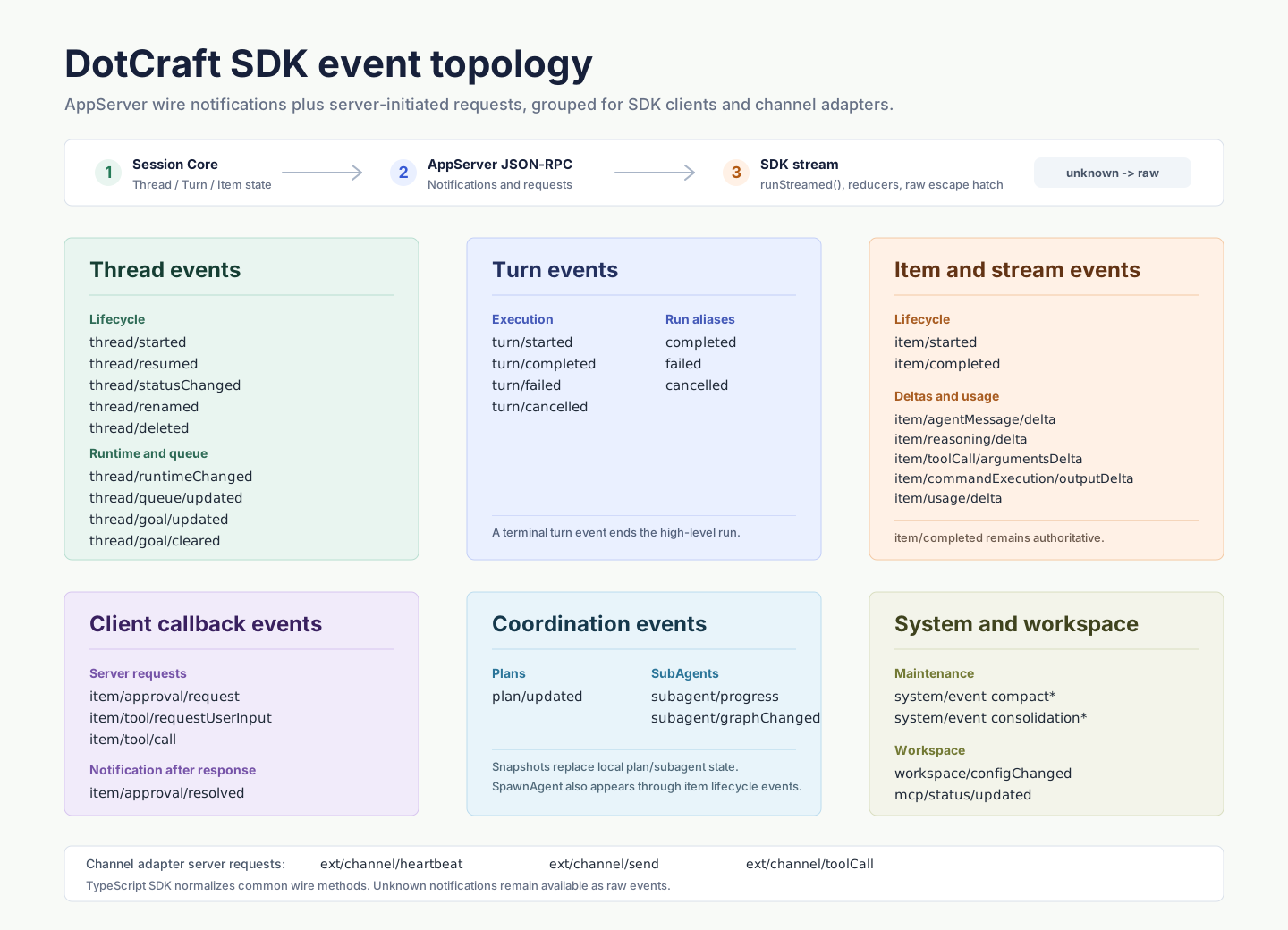
All three SDKs normalize common wire notifications into run events (DotCraftRunEvent in TypeScript and .NET, RunEvent in Python) and keep unknown notifications as raw, while still exposing the raw notification stream for advanced clients.
Reference
Per-language package details — identity, exports/namespaces, runtime baseline, version, and language-specific profiles:
- TypeScript —
@dotcraft/sdk - .NET —
DotCraft.Sdk - Python —
dotcraft