
Hub Local Coordination
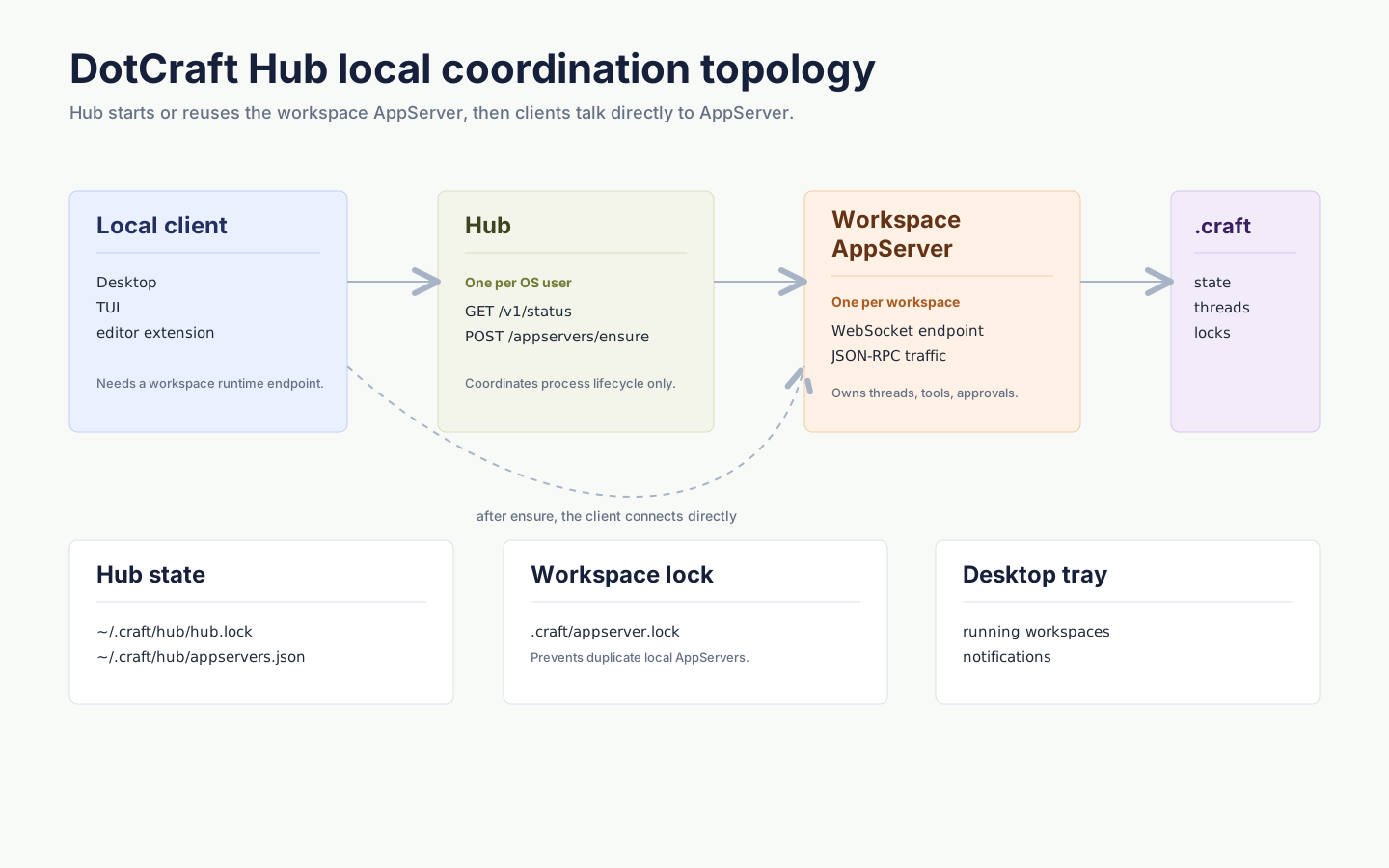
Hub is DotCraft's local runtime coordinator. It runs per OS user and discovers, starts, reuses, and stops the AppServer process for each workspace. Desktop / TUI use Hub by default — most users do not interact with Hub directly.
NOTE
Remote, CI, bots, or explicit AppServer protocol debugging go through AppServer Mode.
Key Properties
- One Hub per OS user
- One AppServer per workspace
- Hub does not handle conversation traffic or proxy the AppServer protocol
- A client only asks Hub during bootstrap: "make sure this workspace's AppServer is available"
- After bootstrap, the client connects directly to the returned AppServer WebSocket URL
When to Start Manually
You usually do not need to run dotcraft hub manually. For coordination debugging:
dotcraft hubHub starts a loopback management API and writes discovery metadata to ~/.craft/hub/hub.lock.
Local State
~/.craft/hub/
├── hub.lock          # current Hub discovery: API URL, PID, start time, local token, binary path
└── appservers.json   # Hub-tracked AppServer state (display & recovery)
Each workspace also has:
<workspace>/.craft/appserver.lockIt records which AppServer process owns the workspace and prevents multiple local AppServers from running against the same workspace.
When Hub or AppServer finds a stale appserver.lock left by a dead process, it removes the lock and continues. If the lock points to a still-running AppServer with a healthy WebSocket endpoint, Hub reuses that endpoint instead of starting a duplicate process.
Desktop and the Tray
Desktop is the visual layer; Hub itself is a headless background coordinator. Desktop can:
- Open or switch workspaces
- See recent and running workspaces
- Open Desktop or Dashboard
- Restart or stop Hub-managed workspace runtimes
- Receive system notifications forwarded through Hub (task completion, approvals, runtime state)
When the tray exits, Desktop can ask Hub to stop the workspace AppServers Hub manages.
Troubleshooting
Desktop cannot open a workspace
Make sure dotcraft / dotcraft.exe is on PATH, or configure the AppServer executable path in Desktop settings.
The workspace is locked
<workspace>/.craft/appserver.lock points to another live AppServer that Hub could not safely reuse. Close the Desktop / TUI / CLI using that workspace, or stop the workspace runtime from the tray, then try again. Locks left by dead processes are recovered automatically.
Local port conflicts
Hub allocates local ports automatically. Failure is usually a busy port, permission issue, or security software blocking loopback. Restarting Hub or Desktop normally reallocates ports.
Building a Client
Read Hub Protocol to discover Hub, call ensure, and subscribe to lifecycle events.
Related
- AppServer Mode — remote / multi-client / CI
- Hub Protocol — client protocol overview
- Unified Session Core — where Hub and AppServer sit in the bigger picture